Five Indonesian whale and whale shark deaths prompt calls for more study
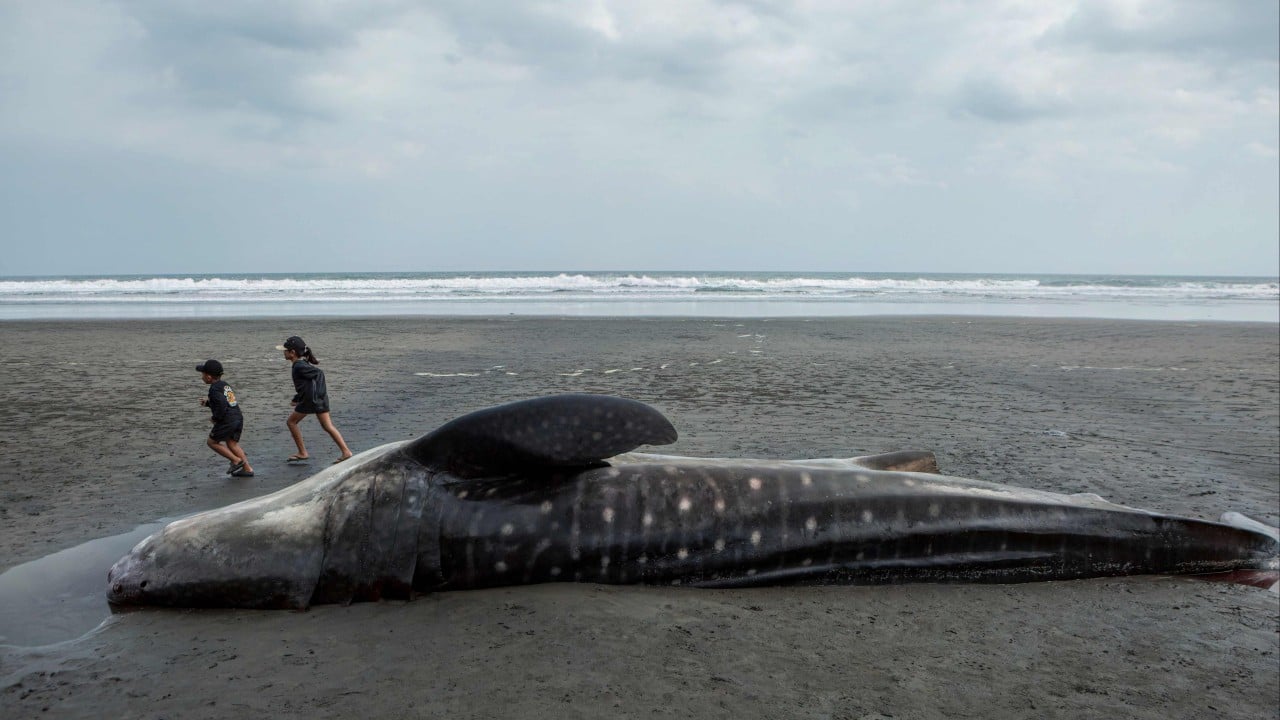
Five whale and whale shark strandings in Indonesia over three weeks have renewed questions about whether such incidents are increasing. Researchers say environmental conditions, pollution, shipping and other human activity may play a role, but improved smartphone reporting could also explain the apparent rise.
Five whale and whale shark strandings in Indonesia over a three-week period have prompted renewed questions about whether such incidents are becoming more common across the archipelago. The latest cases included a whale shark that died in Aceh on September 25, a decomposed whale found in a Riau mangrove, a dead whale in West Java and another whale shark that died in South Sulawesi. The sequence began with a whale shark found dead in Bali on September 12.
The incidents follow a longer-term increase in reported whale shark strandings. A 2025 study by the Elasmobranch Institute Indonesia and Konservasi Indonesia recorded fewer than 10 cases annually from 2011 to 2019, compared with an average of more than 22 from 2020 onwards. The study linked strandings to seasonal and oceanographic conditions, including sea-surface temperatures, wave height and marine productivity.
Researchers have also cautioned that smartphones and social media make remote incidents more likely to be reported. Mark Meekan of the University of Western Australia’s Oceans Institute said strandings had been documented for centuries and could result from navigational errors, geomagnetic anomalies or social behaviour. He said improved communications meant incidents now reached a much wider audience.
Other experts pointed to possible human-related causes. Ahlul Fadli of the Indonesian Forum for the Environment said seismic activity, military sonar, shipping noise and plastic pollution could affect marine animals. Whale sharks also face risks from ship collisions.
Scientists said it was too early to connect the five recent deaths or establish a global trend. Researchers are calling for better data collection, while Konservasi Indonesia and SeaLife are strengthening local rescue and necropsy responses along Java’s southern coast.
This independently written report is based on information supplied by the named publisher. Vertrix News has not independently verified the source report.