Tung Chee-hwa remembered as a pioneer of Hong Kong’s post-1997 leadership
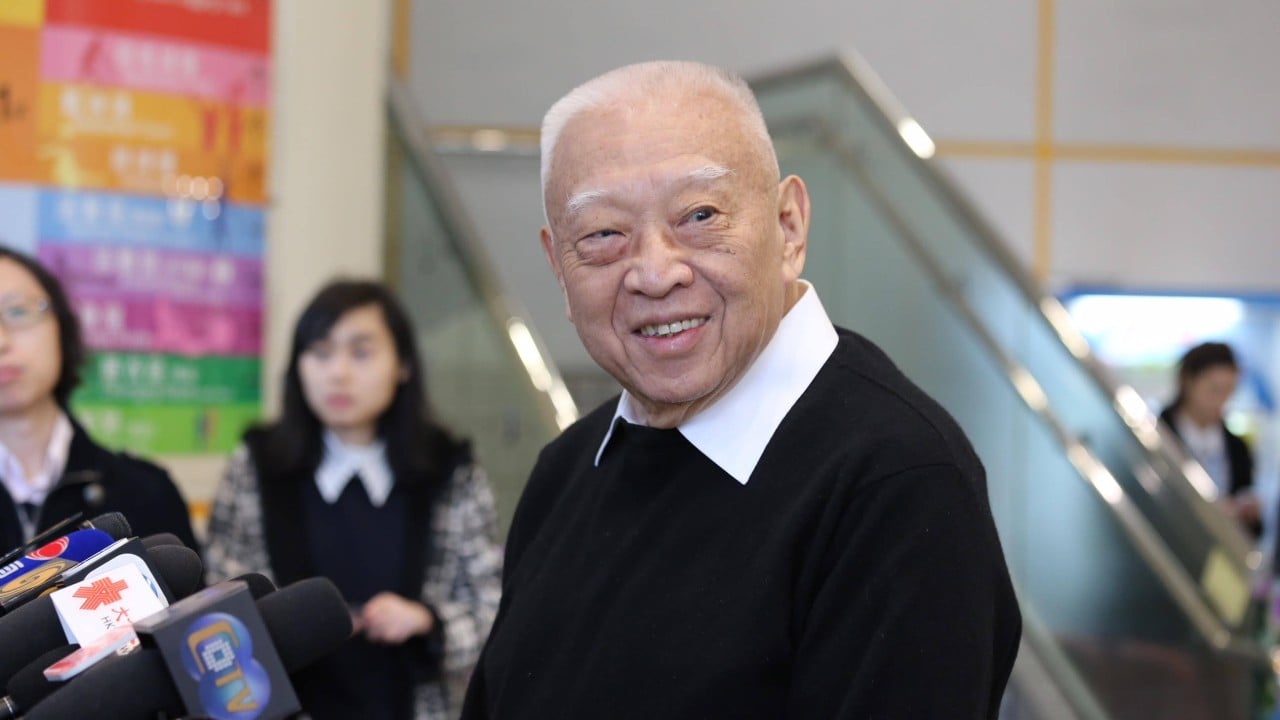
A central government eulogy has highlighted former Hong Kong chief executive Tung Chee-hwa’s contribution to “one country, two systems”. His supporters say his leadership involved navigating unprecedented institutional, economic and social pressures, including the Asian financial crisis, the property downturn and the Sars outbreak.
Former Hong Kong chief executive Tung Chee-hwa has been remembered as a pioneer who carried the unprecedented responsibility of leading the city during the early years after its return to Chinese sovereignty. The assessment was set out in an official eulogy delivered by Shi Taifeng, vice-chairman of the Chinese People’s Political Consultative Conference, on behalf of the central government. Shi described Tung as an outstanding contributor to “one country, two systems”, a patriot, a social activist and a close friend of the Communist Party.
Tung became Hong Kong’s first chief executive after the handover in 1997. His administration faced the Asian financial crisis, a sharp fall in property prices, the Sars outbreak and deep social divisions. The institutions of the Hong Kong Special Administrative Region were new, while expectations of the new constitutional order were high.
The account said Tung had to preserve Hong Kong’s capitalist system, common law tradition and way of life while managing its relationship with a rapidly changing mainland. It described that responsibility as one without an established precedent or guidebook. Tung also pursued institutional changes, including the Principal Officials Accountability System introduced in 2002.
The reform aimed to strengthen political accountability but exposed tensions between politically appointed officials and career civil servants, according to the account. After leaving office, Tung continued public work. He served as a CPPCC vice-chairman from 2005 to 2023, founded the China-United States Exchange Foundation in 2008 and established Our Hong Kong Foundation in 2014.
The account also highlighted his focus on economic development, opportunities for young people, housing, social inequality and relations with the mainland. It said Tung continued serving Hong Kong, China and the wider region after his time as chief executive.
This independently written report is based on information supplied by the named publisher. Vertrix News has not independently verified the source report.