Germany’s rail network struggles as China sustains high-speed expansion
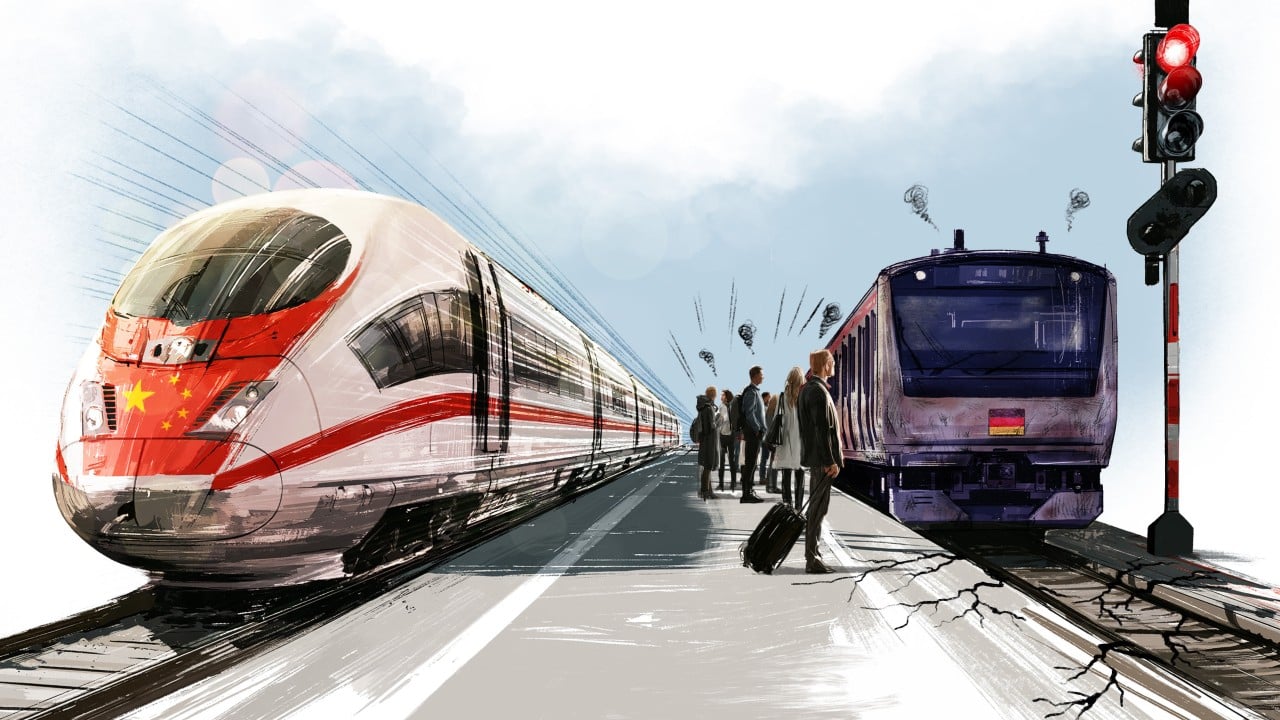
Germany’s railways are facing worsening delays after years of limited investment, ageing infrastructure and rising demand, while China has built the world’s largest high-speed network through sustained state-backed spending. The comparison highlights contrasting funding models, although China’s railway expansion has also produced substantial debt and questions over long-term sustainability.
Germany’s rail network is experiencing worsening delays after years of limited investment, growing passenger and freight demand and an ageing infrastructure, while China has continued to expand its high-speed railway system through sustained state-backed spending. Wang Xixi, who studied in Bavaria more than two decades ago, recalled Germany’s trains as clean, punctual and modern. Her more recent journeys between Berlin and Frankfurt have been marked by delays caused by blocked tracks, faulty points, signal failures and speed restrictions on worn-out sections.
Germany’s long-distance punctuality has remained around 60 per cent for three years and fell to 52.6 per cent during the summer cited in the source material. Passenger traffic has increased by more than 45 per cent since the mid-1990s, while freight traffic has risen by about 90 per cent. Over the same period, the rail network contracted from 40,800 kilometres to about 33,500 kilometres.
Fast and slow services share tracks, allowing disruptions to spread across the system. Labour shortages and bureaucracy have added to the difficulty of maintaining and modernising the network. Deutsche Bahn infrastructure board member Berthold Huber previously described the system as overcrowded, old and prone to faults.
China has laid nearly 50,000 kilometres of high-speed track in less than two decades. More than 95 per cent of its trains are reported to run on time, according to the World Bank, while the fastest service between Xi’an and Beijing now takes four hours and 11 minutes, compared with more than 12 hours for an overnight journey in 2001. Professor Li Hongchang of Beijing Jiaotong University said Chinese rail investment had remained high year after year.
Spending exceeded 700 billion yuan annually for the past decade and reached 901.5 billion yuan last year, according to China State Railway Group. Public financing, government backing and borrowing support the programme. That model carries costs.
China Railway had liabilities of 6.2 trillion yuan at the end of 2024, with a debt-to-asset ratio of 63.5 per cent. Analysts have questioned the sustainability of the debt, while Li said deeper reforms and new revenue sources would be needed to reduce it. Germany’s borrowing limits and a more commercially oriented state-owned operator have constrained investment.
The result is an infrastructure backlog whose effects are increasingly visible in delays and economic disruption.
This independently written report is based on information supplied by the named publisher. Vertrix News has not independently verified the source report.