US Navy creates command to integrate aerial, surface and underwater drones
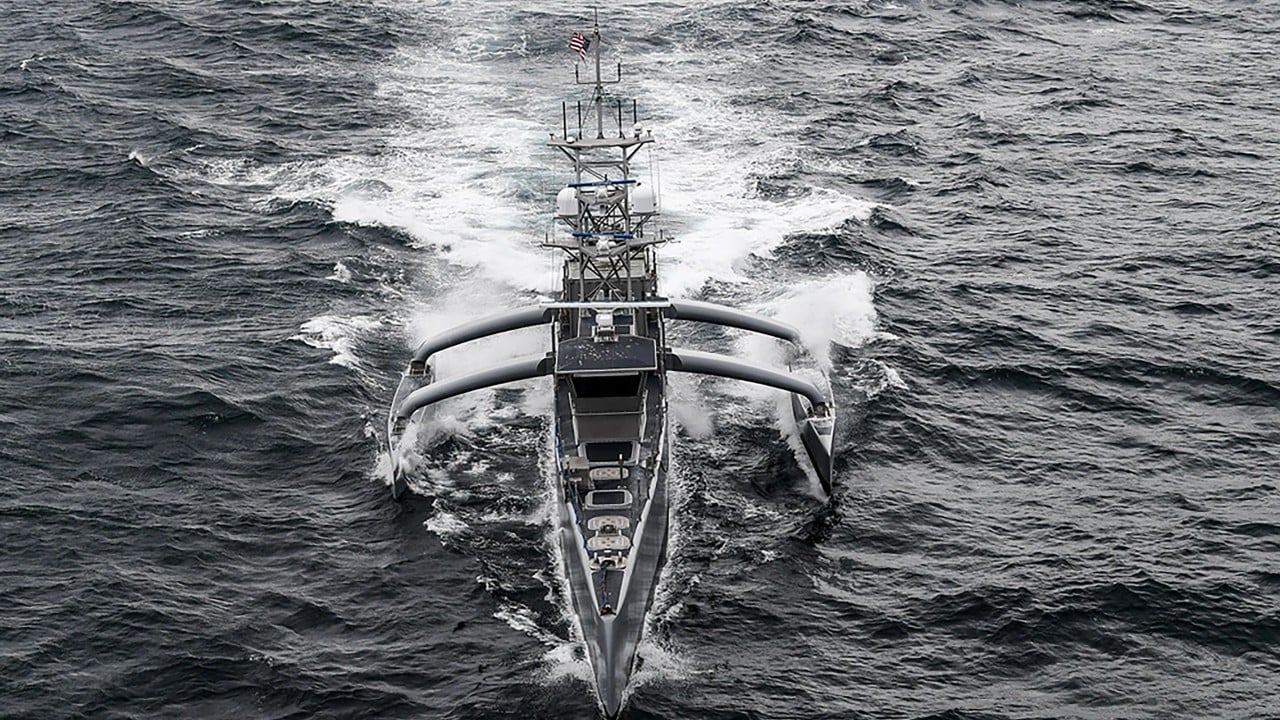
The US Navy has established a new Virginia-based command to develop doctrine, tactics and training for integrating aerial, surface and underwater unmanned systems. The centre is intended to turn separate robotic programmes into an operational force, including for possible Taiwan contingencies, although officials say major command, communications and testing challenges remain.
The US Navy has established a command dedicated to integrating aerial, surface and underwater drones into a single fighting force, a move commanders have linked to preparations for a possible conflict involving Taiwan. The Robotic and Autonomous Systems Warfighting Development Centre was formally established on September 24 in Virginia. It will develop doctrine and tactics, train sailors and test unmanned systems under realistic operating conditions, including situations in which communications are disrupted.
Chief of Naval Operations Admiral Daryl Caudle said the navy had spent years developing and testing robotic systems, but much of that work had been separated by warfighting domain. He said the next step was integration, arguing that a successful prototype alone did not constitute combat power. The centre is intended to determine how unmanned systems should work together and operate alongside conventional ships, submarines and aircraft.
Its creation follows a Government Accountability Office assessment that found responsibilities divided among platforms and environments, with unclear leadership slowing progress. Michael Bosack of the Parley Policy Institute said the centre’s importance lay in centralising and institutionalising work that had previously been dispersed. Retired Australian naval vice-admiral Peter Jones said a unified command could improve the transfer of technology and lessons, simplify component supply chains and provide senior advocacy for unmanned systems.
The centre also faces practical difficulties. These include managing the frequency spectrum, adapting personnel to new equipment and incorporating unmanned capabilities into operational planning and decision-making. Its first commander, Rear Admiral Melvin Smith, said the organisation would bring together the navy’s work and develop combined tactics.
The navy has not said when it will become fully operational. One possible application is the “hellscape” concept, under which large numbers of unmanned systems could be coordinated to disrupt or slow a People’s Liberation Army amphibious assault across the Taiwan Strait. The concept was outlined publicly by Admiral Samuel Paparo in 2024.
The navy must also address the risk of jamming and communications failure. Similar challenges are being examined by China, whose military plans call for unmanned combat forces, counter-drone capabilities and testing under electronic interference. Chinese military reporting has described exercises in which aircraft and drones maintained operations after simulated disruption.
This independently written report is based on information supplied by the named publisher. Vertrix News has not independently verified the source report.