Chinese study models missile lidar detecting F-35 up to 61.5km at night
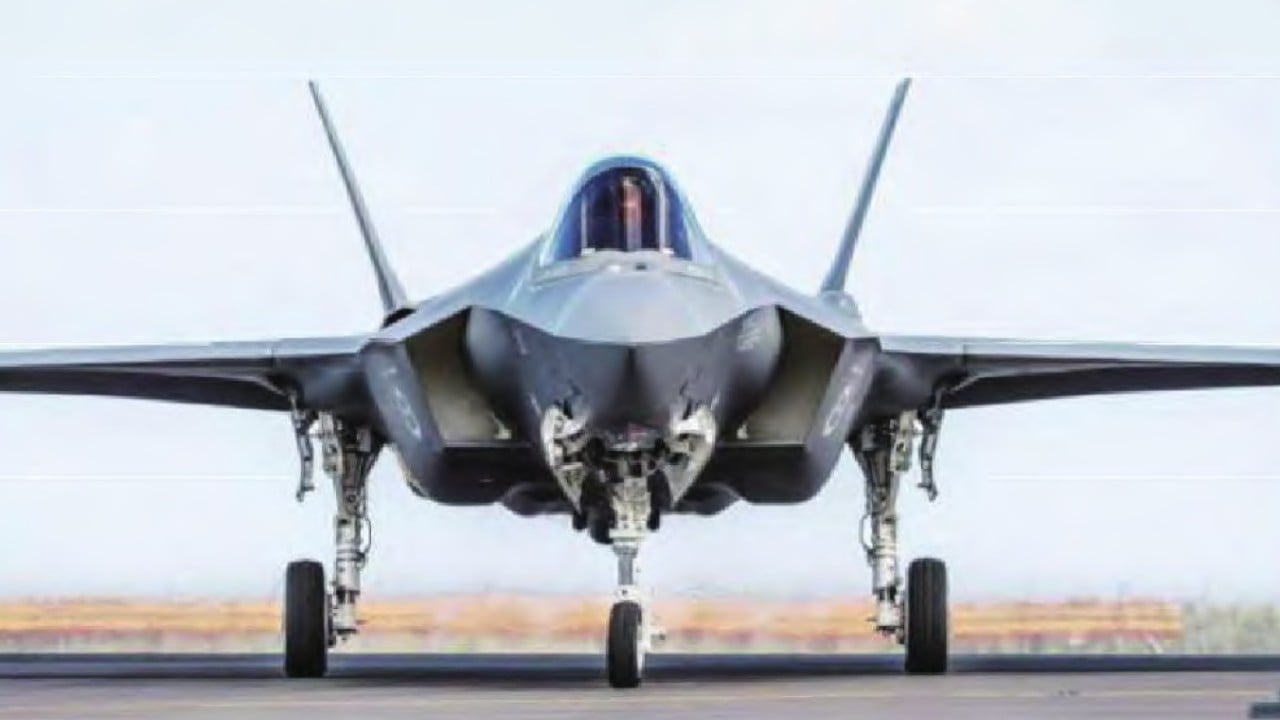
A peer-reviewed Chinese study has modelled a missile-mounted single-photon lidar system capable of detecting and tracking an F-35C at up to 61.5 kilometres at night under ideal conditions. The research remains theoretical: it does not show that the system has been built, flight-tested or integrated into an operational missile.
A computer simulation by Chinese researchers suggests that a missile-mounted single-photon lidar system could detect and track an F-35C stealth fighter at up to 61.5 kilometres at night under ideal conditions. The study was led by Li Zhiyuan of the China Airborne Missile Academy and published in the peer-reviewed Chinese journal Aero Weaponry on September 18. The academy specialises in air-to-air missiles and serves as a research, development and production centre.
The research examined whether lidar using reflected laser light could identify a stealth aircraft designed to reduce its radar signature. Unlike radar, the system uses very small numbers of returning photons. The model considered a 1,064-nanometre wavelength, atmospheric effects, background noise and the recovery time of the detector.
Designed around missile size and power constraints, the simulated system used low-power 1.0 millijoule laser pulses and a compact 100-millimetre lens. The researchers calculated that it needed a signal-to-noise ratio of 8.8 decibels, equivalent to at least 9.4 detected echo photons, to lock onto the aircraft. The maximum simulated detection range was 27.7 kilometres during the day and 61.5 kilometres at night.
At 27.7 kilometres, the model produced target detail accurate to within 20 centimetres in depth and 50 centimetres in transverse resolution. The results could extend a missile’s potential tracking window, but the study does not establish that such a system has been built, flight-tested or deployed. One military analyst questioned whether a narrow laser beam could search a large area of sky, saying it would probably function initially as a rangefinder rather than an early-warning system.
The researchers said further work would focus on optimising photon-related parameters and improving methods for detecting stealth targets with missile-borne single-photon lidar. The F-35’s long-range air-to-air missiles can reportedly engage targets beyond 160 kilometres, according to the source material.
This independently written report is based on information supplied by the named publisher. Vertrix News has not independently verified the source report.